Central Florida's Storm Season and What It Means for Deltona
Living in Deltona means living in one of the most storm-active regions in the United States. Florida's Atlantic hurricane season runs from June 1 through November 30, but the threat of severe weather extends beyond those dates. Tropical storms, intense thunderstorm systems, and the occasional winter nor'easter can all deliver damaging winds, torrential rainfall, and the kind of sustained water intrusion that devastates homes and businesses.
Deltona's geographic position in central Volusia County places it roughly 25 miles from the Atlantic coast, which provides some buffer from the most extreme storm surge. However, the city remains fully exposed to destructive wind speeds, wind-driven rain, and inland flooding from tropical systems. Hurricanes Charley, Frances, and Jeanne in 2004, Hurricane Irma in 2017, and Hurricane Ian in 2022 all caused significant property damage across the Deltona area, and climate scientists project that storm intensity will continue to increase in the coming decades.
At Deltona Water Restoration, we specialize in the water-related damage that storms leave behind. Our IICRC-certified restoration teams are trained, equipped, and locally positioned to respond quickly when a storm strikes, providing everything from emergency tarping and water extraction to complete structural restoration and reconstruction.
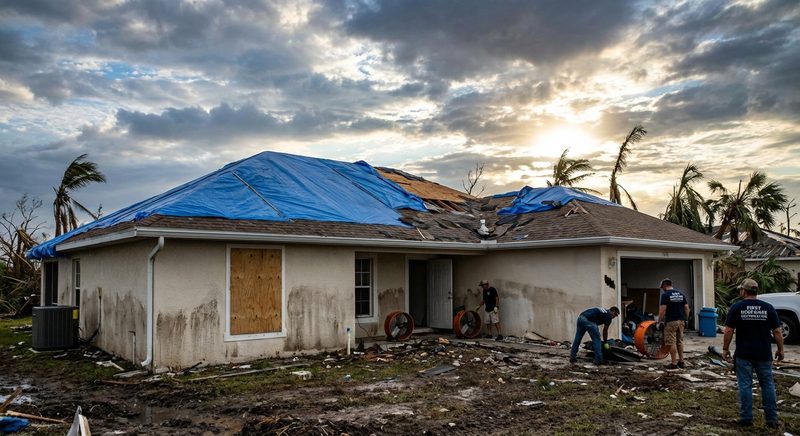
Types of Storm Damage Common in Deltona
Storms damage properties through multiple mechanisms, and the water-related effects are often the most destructive and long-lasting. Understanding these damage types helps homeowners recognize what to look for after a storm and when to call for professional assessment.
Wind-Driven Rain Intrusion
Even without a direct roof breach, hurricane-force and tropical-storm-force winds can push rainwater through seams and gaps that are perfectly watertight under normal conditions. Wind-driven rain commonly enters Deltona homes through roof ridge vents, soffit vents, window frames, sliding glass door tracks, garage door seals, and the joints between walls and roofing materials. The insidious nature of wind-driven rain is that it can saturate attic insulation, wall cavities, and ceiling spaces without any visible leak on the interior, creating hidden moisture pockets that lead to mold growth weeks after the storm has passed.
Roof Damage and Water Entry
Missing shingles, lifted roofing panels, damaged flashing, and compromised roof decking are the most direct sources of storm-related water entry. Even a single missing shingle exposes the underlayment to rainfall, and if the underlayment is aged or damaged, water reaches the roof decking and enters the attic space. From there, water follows gravity and capillary action, potentially traveling along rafters and framing before dripping onto ceilings far from the original breach point. This is why a thorough post-storm inspection by trained professionals is essential — the visible ceiling stain may be 10 or 15 feet from the actual point of entry.
Flooding from Overwhelmed Drainage
Deltona's storm drainage infrastructure, like that of many Florida communities, can be overwhelmed during heavy tropical rainfall events. When storm drains, retention ponds, and drainage swales reach capacity, water backs up into streets, yards, and eventually into homes. Slab-on-grade construction, the predominant foundation type in Deltona, means there is no crawl space buffer between rising water and your interior floor level. For flooding events, our flood cleanup team deploys industrial extraction equipment to remove standing water rapidly.
Window and Door Failures
High winds can shatter windows, force open doors, and compromise the seals around frames, allowing large volumes of rain to enter the home. Even impact-resistant windows can fail under extreme conditions, and older single-pane windows in Deltona's 1980s-era homes are particularly vulnerable. Once a window or door is breached during a storm, rain and wind can cause extensive interior damage within minutes.
Our Storm Damage Restoration Process
Storm damage restoration requires a coordinated, multi-phase approach that addresses immediate threats, removes water, dries the structure, and rebuilds what was lost. Our process is designed to move quickly while maintaining the thoroughness that proper restoration demands.
Phase 1: Emergency Response and Stabilization
Our first priority after a storm is stabilizing your property to prevent further damage. This includes emergency roof tarping over breached areas, boarding up broken windows and doors, and establishing temporary weatherproofing. We respond to storm calls 24/7, understanding that every hour of continued exposure to the elements compounds the damage. Our emergency water removal crews work simultaneously to begin extracting any standing water from the interior.
Phase 2: Comprehensive Damage Assessment
Once the property is stabilized, our technicians conduct a detailed damage assessment using moisture meters, thermal imaging, and visual inspection. We document every area of damage with photographs, written descriptions, and moisture readings. This assessment serves two critical purposes: it guides our restoration plan, and it provides the detailed documentation your insurance company needs to process your claim accurately.
Phase 3: Water Extraction and Structural Drying
Using industrial extraction equipment, we remove all standing water from the property. We then deploy commercial air movers and LGR dehumidifiers to dry the structure from the inside out. Storm damage drying in Deltona presents unique challenges because post-storm conditions often include elevated outdoor humidity and possible interruptions to power supply. Our equipment includes generator-powered drying systems for situations where grid power is unavailable. We monitor moisture levels daily until every surface meets its dry standard.
Phase 4: Mold Prevention
Storm-dampened properties in Central Florida are at extremely high risk for mold development. We apply antimicrobial treatments to all affected surfaces to prevent mold colonization during the drying process and afterward. If the drying phase extends beyond 48 hours, which is common in large-scale storm damage, we increase monitoring frequency and expand antimicrobial treatment to adjacent areas as a precaution.
Phase 5: Restoration and Reconstruction
After the property is fully dried and treated, we begin the restoration phase. This includes replacing damaged drywall, insulation, flooring, trim, and cabinetry. We match materials to your existing finishes wherever possible, and we handle all aspects of reconstruction from framing to finish work. Our goal is to return your home to its pre-storm condition — or better.
Why Deltona Properties Are Particularly Vulnerable
Several factors specific to Deltona's development history and geography make its properties more susceptible to storm damage than newer construction in other regions.
- Building age: The majority of Deltona's housing stock was built between 1980 and 2005, before Florida's updated building codes (implemented after the devastating 2004 hurricane season) required enhanced wind resistance, impact-rated windows, and improved roof attachment systems. Older homes may not have hurricane straps connecting the roof to walls, and their roofing materials have often exceeded their rated lifespan.
- Terrain and drainage: Deltona's landscape is relatively flat with clay-based soils that drain slowly. The city's network of retention ponds and drainage systems can be overwhelmed during intense rainfall, leading to localized flooding in neighborhoods that may not be in a designated flood zone.
- Mature tree canopy: Deltona's established neighborhoods feature large mature trees — primarily oaks and pines — whose limbs and trunks become projectiles during high winds. Fallen trees and branches cause direct structural damage and can breach roofing, siding, and fencing.
- Aging infrastructure: Older plumbing, electrical, and roofing systems are more likely to fail during and after storms, compounding the damage caused by the weather itself.
Navigating Insurance Claims for Storm Damage in Florida
Filing an insurance claim for storm damage in Florida can be complex, and the distinction between wind damage (covered by homeowners insurance) and flood damage (requiring separate flood insurance) is critically important. Wind-driven rain that enters through a storm-damaged roof is generally considered wind damage and is covered under standard policies. However, water that enters the home from ground-level flooding, even during the same storm, is classified as flood damage and requires a separate flood policy.
Our team has extensive experience working with Florida insurance carriers on storm damage claims. We provide detailed, professional documentation of all damage, attend adjuster inspections to ensure nothing is overlooked, and advocate on your behalf for fair coverage. We understand the urgency — Florida law requires that storm damage claims be filed promptly, and delays in reporting can complicate or reduce your coverage.
We strongly recommend that all Deltona homeowners review their insurance coverage before storm season begins. Verify that your wind deductible (often a percentage of your home's insured value, not a flat dollar amount) is what you expect, and consider adding flood insurance if you do not already carry it.
Need Storm Damage Repair in Deltona?
Our IICRC-certified team responds within 60 minutes, 24/7. Get a free estimate today.
Get Free Estimate →