Why Deltona's Climate Makes Mold a Persistent Threat
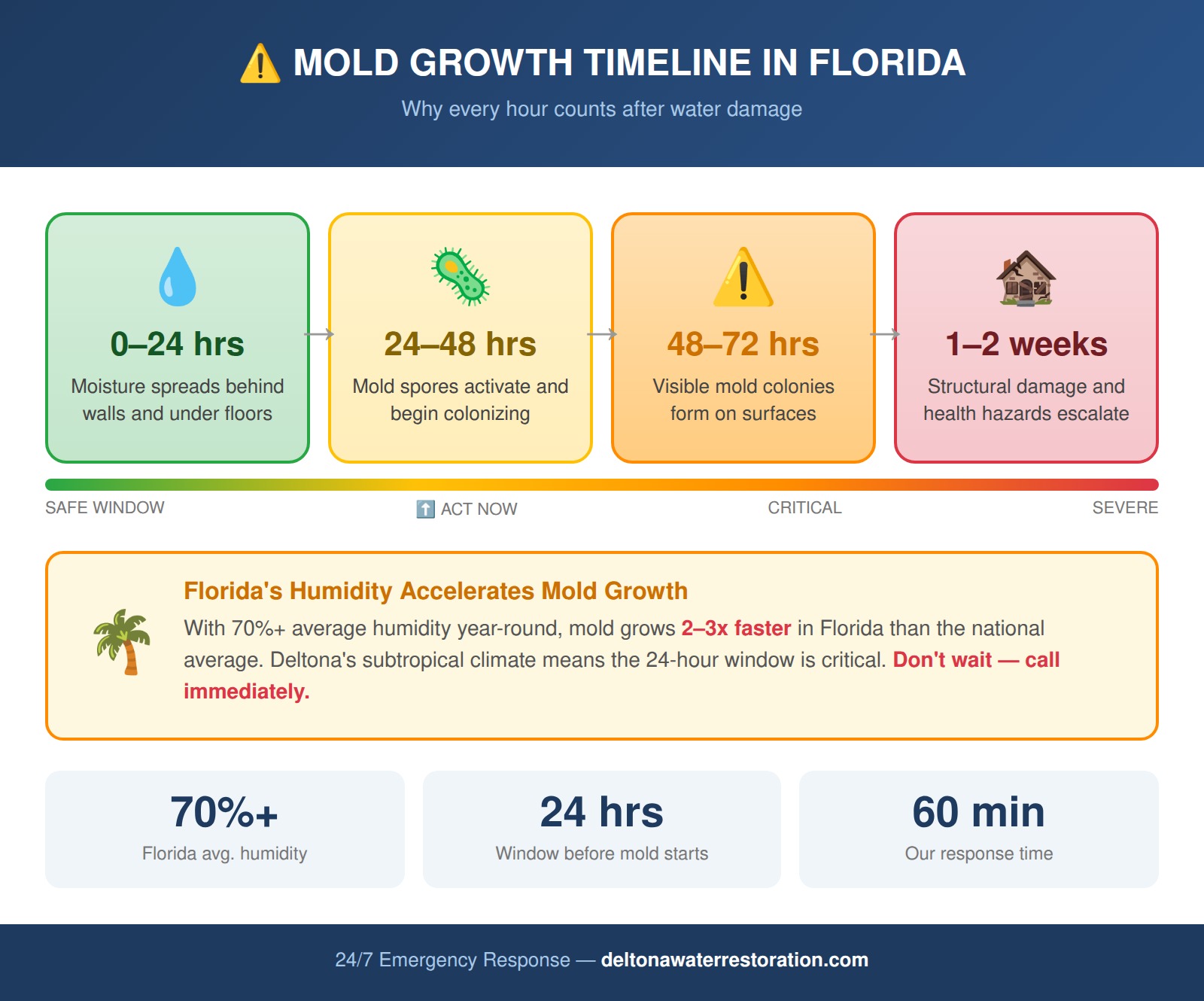
Deltona, Florida has the ideal conditions for mold growth: warm temperatures averaging 72 degrees Fahrenheit year-round, high relative humidity that frequently exceeds 80 percent, and abundant moisture from rain, storms, and the region's high water table. Mold spores are naturally present in outdoor air everywhere, but inside a Deltona home or business, these spores only need a moisture source and an organic surface to begin colonizing in as little as 24 to 48 hours.
The reality for Central Florida homeowners is that mold is not a question of "if" but "when." Every home in Deltona will encounter mold conditions at some point, whether from a slow plumbing leak behind a wall, condensation from an overworked air conditioning system, water intrusion during a storm, or simply the cumulative effect of living in one of the most humid regions in the United States. The key is identifying and addressing mold before it becomes a widespread problem that threatens your family's health and your property's structural integrity.
At Deltona Water Restoration, we provide professional mold remediation services that go far beyond surface cleaning. Our IICRC-certified technicians follow the S520 Standard for Professional Mold Remediation and use advanced detection equipment, containment protocols, and antimicrobial treatments to eliminate mold at its source and prevent it from returning.
Health Risks of Mold Exposure
Mold exposure is more than an aesthetic or property concern — it is a genuine health hazard, particularly for children, the elderly, and individuals with respiratory conditions, allergies, or compromised immune systems. The health effects of mold exposure range from mild to severe, depending on the type of mold, the duration of exposure, and individual sensitivity.
- Respiratory issues: Coughing, wheezing, shortness of breath, and aggravation of asthma symptoms. Prolonged exposure can contribute to the development of respiratory infections.
- Allergic reactions: Sneezing, runny nose, red eyes, skin rash, and sinus congestion. Many people who have never had allergies develop symptoms when living in a mold-affected home.
- Mycotoxin exposure: Certain mold species, including Stachybotrys chartarum (black mold) and some Aspergillus species, produce mycotoxins — toxic compounds that can cause neurological symptoms, chronic fatigue, headaches, and immune system suppression with prolonged exposure.
- Hypersensitivity pneumonitis: Repeated inhalation of mold spores can cause inflammation of the lung tissue, leading to a serious condition that mimics pneumonia.
The Florida Department of Health recognizes indoor mold as a significant environmental health concern and recommends professional remediation for any mold growth covering more than 10 square feet. If you suspect mold in your Deltona home, do not attempt to clean it yourself — disturbing a mold colony without proper containment can release millions of spores into the air and actually worsen the problem.
Common Types of Mold Found in Deltona Homes
Central Florida's warm, humid environment supports dozens of mold species, but several types appear repeatedly in Deltona homes and businesses.
Stachybotrys Chartarum (Black Mold)
Perhaps the most feared mold species, Stachybotrys is a greenish-black mold that grows on materials with high cellulose content — drywall paper, cardboard, ceiling tiles, and wood. It requires consistently wet conditions to grow and is often found behind walls where a slow leak has been saturating the drywall for weeks or months. Black mold produces mycotoxins and requires careful containment during removal to prevent spore dispersal.
Aspergillus
One of the most common indoor mold genera worldwide, Aspergillus includes over 180 species, many of which thrive in Florida's climate. It appears in colors ranging from yellow-green to brown to black and commonly grows on walls, insulation, paper products, and inside HVAC systems. Some Aspergillus species produce aflatoxins, which are potent carcinogens, making professional identification and remediation essential.
Cladosporium
Frequently found in both indoor and outdoor environments, Cladosporium appears as olive-green to brown-black colonies and commonly grows on painted surfaces, wood, textiles, and inside HVAC ducts. While less toxic than black mold, Cladosporium is a significant allergen and can cause respiratory issues with prolonged exposure.
Penicillium
Recognizable by its blue-green coloration and musty odor, Penicillium grows rapidly on water-damaged materials including wallpaper, carpet, fiberglass insulation, and furniture. It spreads quickly through the air and is a common trigger for allergic reactions and asthma attacks.
Our Mold Remediation Process
Effective mold remediation is a systematic, multi-step process that addresses both the visible mold and the hidden conditions that allowed it to grow. Our process follows IICRC S520 standards and Florida state guidelines for mold assessment and remediation.
Step 1: Professional Mold Assessment
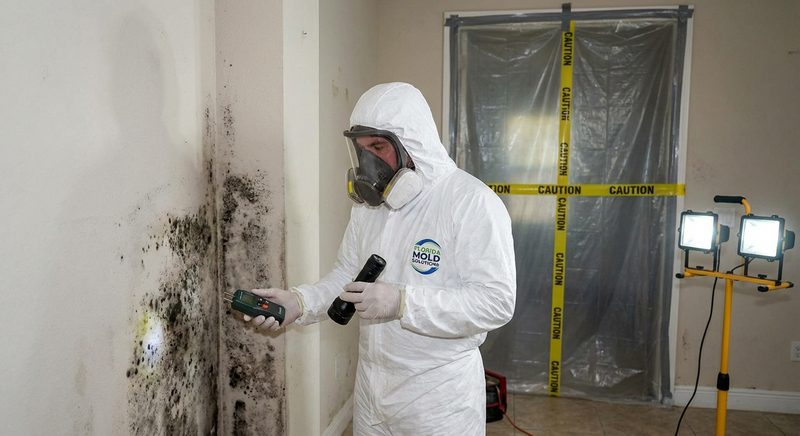
Every remediation project begins with a thorough inspection. Our technicians use moisture meters, thermal imaging cameras, and borescopes to locate all areas of mold growth, including colonies hidden behind walls, above ceiling tiles, and beneath flooring. We collect air samples and surface swabs for laboratory analysis to identify the specific mold species present and determine spore concentration levels. This assessment guides the remediation plan and provides a baseline for post-remediation verification.
Step 2: Containment
Before any mold is disturbed, we establish containment barriers using polyethylene sheeting and negative air pressure machines equipped with HEPA filtration. This prevents spores from spreading to unaffected areas of your home during the removal process. For large-scale remediation, we create decontamination chambers and restrict access to the work area throughout the project.
Step 3: Mold Removal and Material Disposal
Mold-contaminated porous materials — including drywall, insulation, carpet, and heavily affected wood — are carefully removed and double-bagged for disposal following Florida's waste handling regulations. Non-porous surfaces such as concrete, metal, and glass are cleaned with specialized antimicrobial solutions. Our technicians wear full personal protective equipment including respirators, protective suits, and gloves throughout this phase.
Step 4: HEPA Vacuuming and Air Scrubbing
After removal of contaminated materials, we HEPA vacuum all surfaces in the contained area to capture residual spores. Commercial air scrubbers with HEPA filtration run continuously to clean the air, typically for 24 to 48 hours, reducing airborne spore counts to safe levels.
Step 5: Antimicrobial Treatment and Prevention
We apply EPA-registered antimicrobial and antifungal treatments to all affected surfaces to kill remaining mold at the microscopic level and create an environment resistant to future growth. We also address the original moisture source — whether it was a flooding event, a plumbing leak, poor ventilation, or condensation — to prevent the mold from returning.
Step 6: Post-Remediation Verification
After remediation is complete, we conduct post-remediation verification (PRV) testing, including new air samples and surface swabs, to confirm that mold levels have returned to normal background levels. We provide you with a detailed remediation report and clearance documentation for your records and insurance company.
When to Call a Professional for Mold in Deltona
While small amounts of surface mold on bathroom tiles or window sills can often be handled with household cleaning products, professional remediation is recommended in the following situations:
- Mold covers an area larger than 10 square feet
- Mold is growing behind walls, above ceilings, or under flooring
- The mold resulted from a sewage backup or Category 3 water event
- Occupants are experiencing health symptoms that may be mold-related
- Mold keeps returning after you have cleaned it
- The mold is inside your HVAC system or ductwork
- You are preparing to sell your home and need documented clearance
Preventing Mold in Your Deltona Home
While no home in Central Florida is completely immune to mold, these preventive measures can significantly reduce your risk:
- Control indoor humidity: Keep indoor relative humidity below 60 percent using your air conditioning system and supplemental dehumidifiers. Monitor humidity with a hygrometer.
- Maintain your AC system: Clean or replace filters monthly, ensure condensate drain lines are clear, and have your system serviced annually. A well-maintained AC system is your primary defense against indoor moisture in Florida.
- Fix leaks immediately: Any plumbing leak, roof leak, or window seal failure should be repaired within 24 hours. Even a small drip can create conditions for mold growth within days.
- Ventilate high-moisture areas: Use exhaust fans in bathrooms and kitchens. Ensure your dryer vents to the outside, not into a garage or attic.
- Inspect regularly: Check under sinks, behind toilets, around water heaters, and in attic spaces quarterly for signs of moisture or mold.
Need Mold Remediation in Deltona?
Our IICRC-certified team responds within 60 minutes, 24/7. Get a free estimate today.
Get Free Estimate →