When Water Strikes, Every Minute Matters
A burst pipe at 2 a.m. A water heater that fails while you are at work. A toilet overflow that sends water cascading through your ceiling into the room below. These are the scenarios that Deltona homeowners call us about every day, and they all share one thing in common: the damage gets exponentially worse with every hour that passes without professional intervention.
Water does not wait for a convenient time to cause damage. It immediately begins saturating drywall, warping hardwood floors, soaking into carpet padding, and wicking up through porous materials by capillary action. In Deltona's subtropical climate, where ambient humidity averages between 70 and 80 percent throughout the year, even moderate water intrusion events create conditions for mold growth within 24 hours. After 48 hours, what might have been a straightforward extraction and drying job can become a full-scale mold remediation project costing thousands of dollars more.
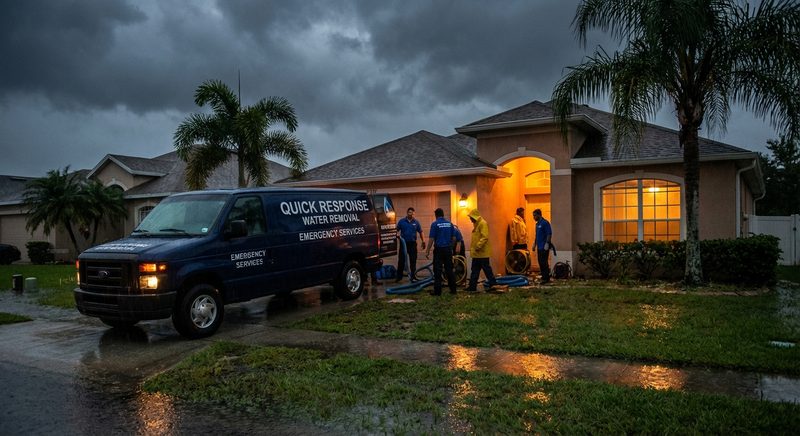
That is why Deltona Water Restoration operates a true 24/7 emergency response service with a guaranteed 60-minute arrival time. We do not schedule you for the next available slot or ask you to wait until morning. When you call, a fully equipped crew is dispatched immediately to your location.
For a quick checklist to use while a crew is on the way, read our guide to what to do first after water damage in Deltona.
Common Water Emergencies in Deltona Homes
Our emergency teams respond to every type of residential and commercial water intrusion event. Here are the most common emergencies we handle in the Deltona area.
Burst and Leaking Pipes
Plumbing failures are the single most common cause of indoor water damage in Deltona. Many homes in the city were built in the 1980s and 1990s using polybutylene piping, a material that has since been recognized as prone to deterioration and failure. Even homes with copper or PEX plumbing can experience burst pipes from corrosion, high water pressure, or physical damage. A half-inch supply line under pressure can release 50 gallons of water per minute, flooding an entire floor in less than an hour.
Water Heater Failures
The average water heater has a lifespan of 8 to 12 years, and Deltona's mineral-rich well water and municipal supply can accelerate tank corrosion. When a water heater fails, it typically releases its full 40 to 80 gallon tank contents onto the floor, with additional water flowing from the supply line until it is shut off. Because water heaters are often located in garages, utility closets, or attics, the flooding can go unnoticed for hours.
AC Drain Line Clogs and Overflows
Florida homeowners run their air conditioning systems nearly year-round, and the condensate drain line handles a tremendous volume of moisture. When algae, mold, or debris clogs the drain line, water backs up into the drip pan and overflows. If the float switch fails or is not installed, water can pour into ceilings, walls, and interior spaces. In Deltona, AC-related water damage is most common during the summer months when systems run continuously and produce the most condensation.
Toilet Overflows and Fixture Failures
A running toilet with a failed flapper valve can waste thousands of gallons, but a true overflow sends contaminated water across bathroom floors and potentially into adjacent rooms or the floor below. Supply line failures at toilets, sinks, and washing machines are also common, particularly when older braided stainless steel or rubber supply lines deteriorate.
Roof Leaks During Heavy Rain
Deltona experiences an average of 52 inches of rainfall annually, with the heaviest precipitation between June and September. Missing shingles, degraded flashing, clogged gutters, and aging roof penetrations around plumbing vents and skylights can all allow water into attic spaces and interior ceilings. During intense thunderstorms, even minor roof defects can admit significant volumes of water in a short period.
Our 60-Minute Emergency Response Process
When you contact Deltona Water Restoration for an emergency, here is exactly what happens.
Immediate Dispatch
Our 24/7 dispatch center takes your call and immediately assigns the nearest available crew. While the team is en route, our dispatcher walks you through critical safety steps: turning off electricity to affected areas, shutting off the water source if possible, and moving valuables to dry ground. Our average arrival time is under 45 minutes for locations within Deltona city limits.
Rapid Assessment
On arrival, our lead technician performs a rapid damage assessment, identifying the water source, the affected area, the water category, and any immediate safety hazards. We document everything with photos and moisture readings from the very first moment — this documentation is critical for insurance claims and helps establish the baseline condition of your property.
Industrial Water Extraction
Using truck-mounted extraction units and portable submersible pumps, we begin removing standing water immediately. Our equipment can extract thousands of gallons per hour — orders of magnitude more than any consumer-grade pump or wet-dry vacuum. For carpeted areas, we use weighted extraction tools that pull water from the carpet and pad simultaneously. For hard surfaces, we use squeegees and surface extraction units designed to capture every possible gallon before it can migrate further into the structure.
Moisture Detection and Mapping
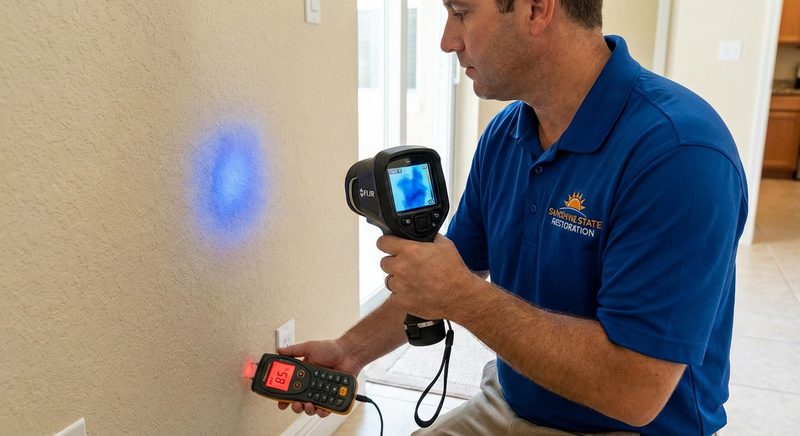
Standing water is only part of the problem. Using pin-type and pinless moisture meters, thermal imaging cameras, and hygrometers, we map the full extent of moisture intrusion throughout the affected area. This includes testing inside wall cavities, under flooring, above ceilings, and in adjacent rooms that may not show visible damage. This moisture map guides the placement of drying equipment and ensures nothing is missed.
Structural Drying and Dehumidification
After extraction, we deploy a calculated combination of commercial air movers and low-grain refrigerant (LGR) dehumidifiers. The number and placement of equipment is determined by industry standards based on the square footage, material types, and current moisture levels. In Deltona's high-humidity environment, standard drying methods are often insufficient — our LGR dehumidifiers are specifically designed to achieve effective drying even when outdoor humidity exceeds 80 percent. We monitor and document moisture levels daily, adjusting equipment as needed until every surface meets its dry standard.
The True Cost of Waiting
Many homeowners hesitate to call for professional water removal, hoping the problem will resolve itself or that fans and towels will be sufficient. The data tells a different story about what delayed response costs.
- Within 1 hour: Water saturates carpeting, padding, and drywall at the base of walls. Furniture begins absorbing moisture. Damage is typically reversible with prompt extraction.
- Within 24 hours: Drywall begins to swell and lose structural integrity. Wood flooring starts to cup and warp. Metal surfaces begin to tarnish. Mold spores, always present in Florida's air, find the moisture conditions they need to begin colonizing.
- Within 48 hours: Mold colonies become visible. Drywall may need to be cut out and replaced rather than dried in place. Wood subflooring begins to swell, potentially lifting tile and hardwood above it. Odors develop.
- Within 72 hours and beyond: Structural framing can begin to weaken. Mold spreads into wall cavities and HVAC systems. Electrical systems face corrosion risk. What was a $2,000 water removal job may now require $10,000 or more in flood cleanup, mold remediation, and reconstruction.
The cost of professional emergency water removal is almost always a fraction of the cost of the additional damage caused by delay. Our free on-site estimates give you a clear picture of costs before any work begins, and we work directly with your insurance company to help maximize your coverage.
What to Do Before Our Team Arrives
While you wait for our 60-minute response, there are several steps you can take safely to minimize additional damage.
- Ensure personal safety first. If standing water is in contact with electrical outlets, appliances, or wiring, do not enter the water. Turn off electricity at the breaker panel if you can reach it safely.
- Stop the water source. If the flooding is from a plumbing failure, turn off the water supply valve at the fixture. If you cannot locate the fixture valve, shut off the main water supply to the house, typically located at the meter near the street or at the main shutoff valve where the supply line enters the home.
- Move valuables to dry ground. Elevate or relocate electronics, important documents, photographs, and irreplaceable personal items away from the water.
- Do not use household vacuums in standing water. Standard vacuums and even shop vacuums are not designed for flood water extraction and create a serious electrocution risk.
- Document the damage. Take photos and video of the flooding and damaged areas. This documentation is valuable for insurance claims and will supplement our professional assessment.
Need Emergency Water Removal in Deltona?
Our IICRC-certified team responds within 60 minutes, 24/7. Get a free estimate today.
Get Free Estimate →